Stroke Connect
At a Glance
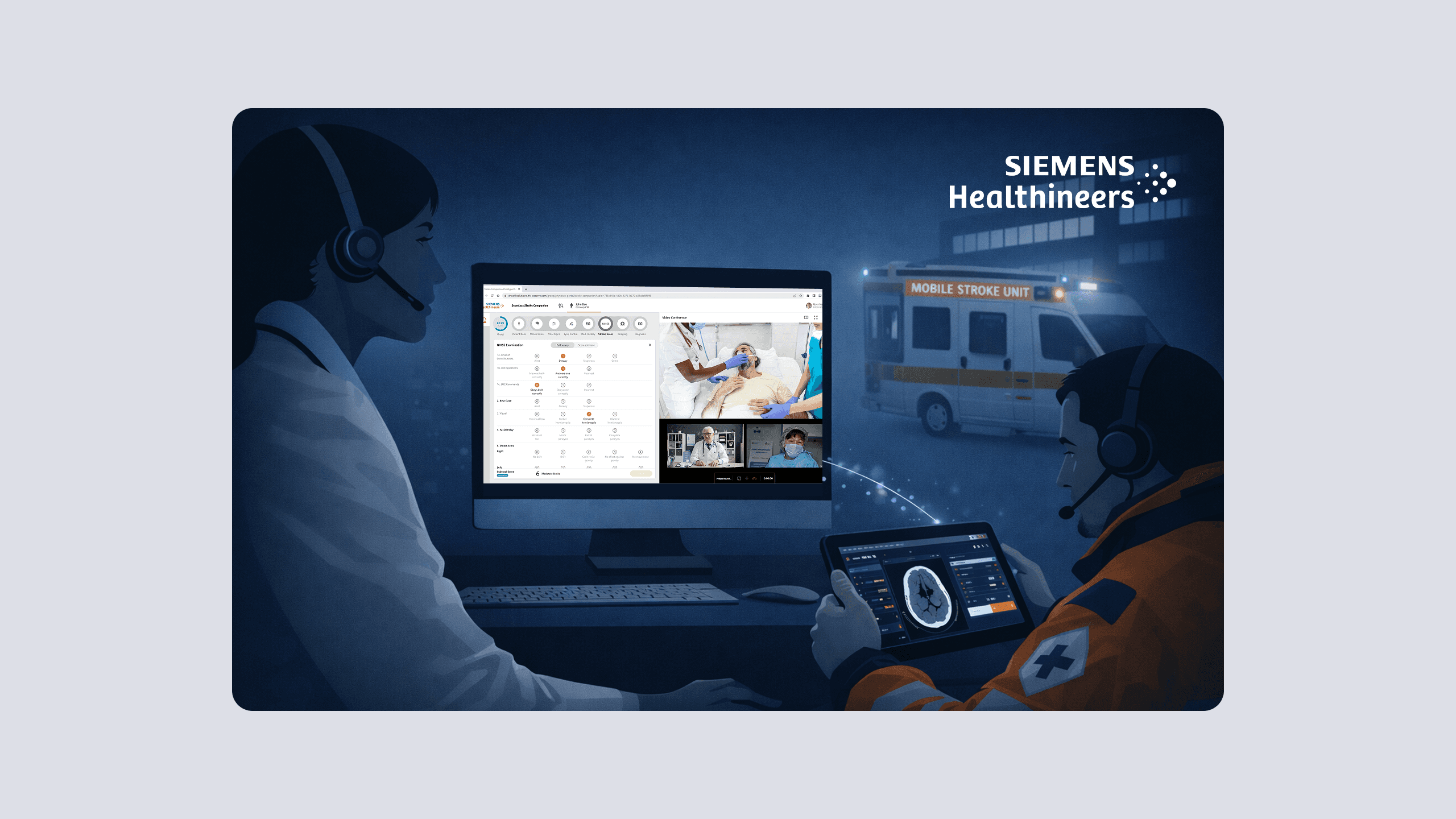
Stroke Connect is a clinical collaboration platform designed to connect pre-hospital stroke assessment with in-hospital decision-making. This system is integrated into mobile stroke units (ambulances equipped with CT machines) and hospital systems. It enables real-time data sharing, guided workflows, and remote expert collaboration to reduce time-to-treatment in acute stroke cases.
Process Followed
Design Thinking Framework + Linear Design Process
Analysis of user research insights -> Design thinking workshops -> Ideation -> Validation -> Iteration -> Mobile-desktop harmonization
Role & Responsibilities
My work focused on interaction design across mobile and desktop platforms, ensuring usability, consistency, and harmonization within a regulated medical environment, while supporting users with very different professional backgrounds.
Aim
Stroke Connect’s digital workflows aim to standardize and accelerate clinical decision-making during the most critical phase of care.
Team at Work
This project was both exciting and challenging at the same time. Collaborations took place between product and engineering teams to discuss GTM strategies and UX priorities. Deep domain research and expert discussions were done to understand regulatory constraints.
Involved
A small team of two interaction designers and a visual designer was working on the collaboration module for Stroke Connect
Project Scope & Context
Stroke care is designed for an extremely time-sensitive workflow. Every minute without treatment for the patient increases brain damage and worsens outcomes.
Key Challenges
Data Silos
Information black box between ambulance teams, radiologists, neurologists, and hospital systems
Delayed Clinical Decision
Lack of real-time insights in pre-hospital care settings
Variability in Clinician Workflows
Personas of multiple stakeholders with different medical professions and workflows
Research KPI
Reduce time-to-treatment for patients with a heart stroke
UX Role & Contributions
1. Design challenge
How might we create a user experience that enables clinicians to rapidly and confidently document, review, and communicate clinical assessments in time-critical, high-stress environments?
User groups:
Physicians
Paramedics
Context of use:
On-scene emergency settings
Ambulance environment
Remote consultation between hospital and field teams
2. User Research Insights
Conducted several field studies, qualitative and quantitative interviews
3. UX Strategy & Design Principles
Based on research, core design principles include:
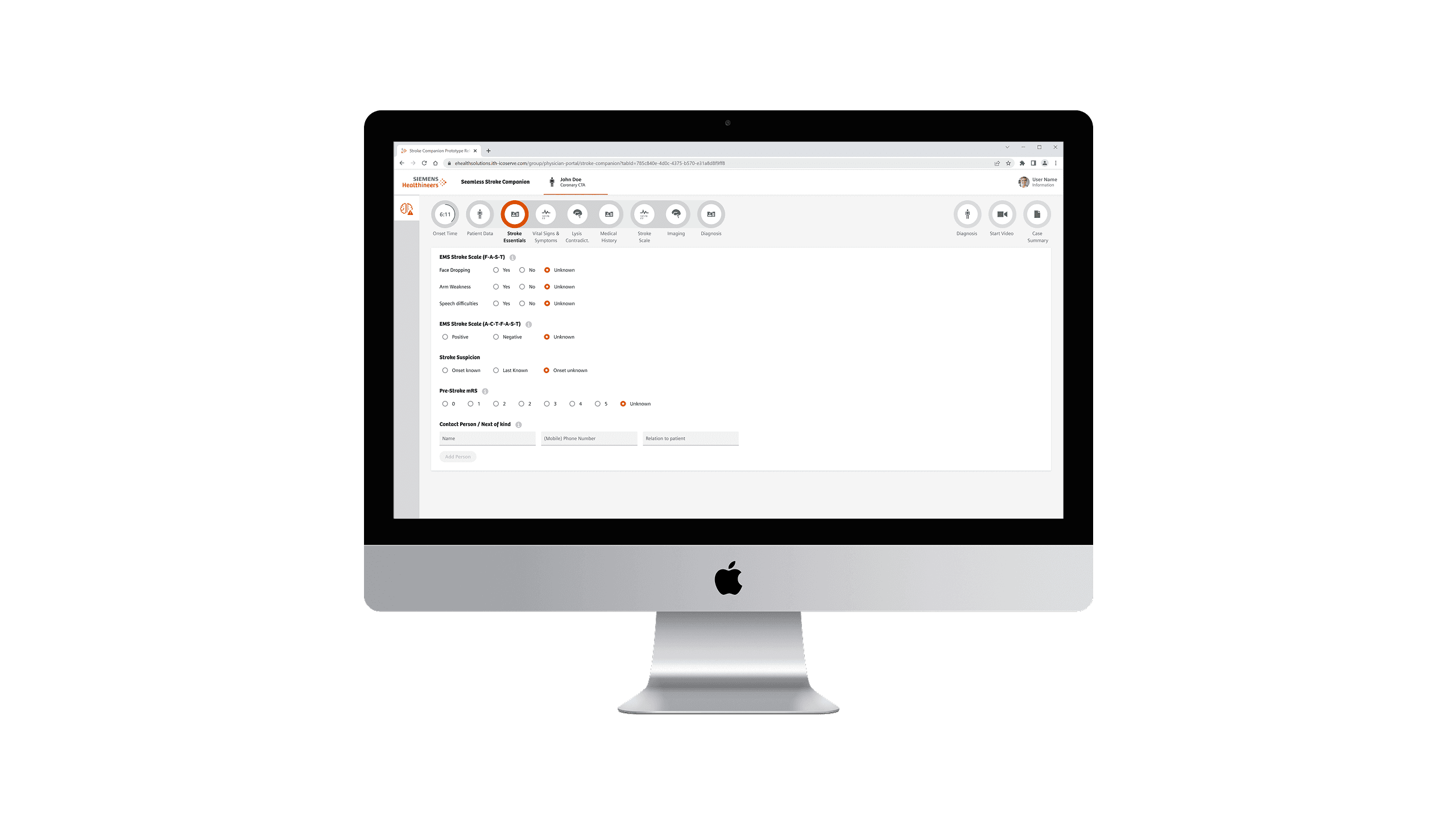
Clarity over complexity: Simplify data entry and reduce unnecessary UI elements during time-critical tasks.
Contextual guidance: Provide task-based workflows with embedded help.
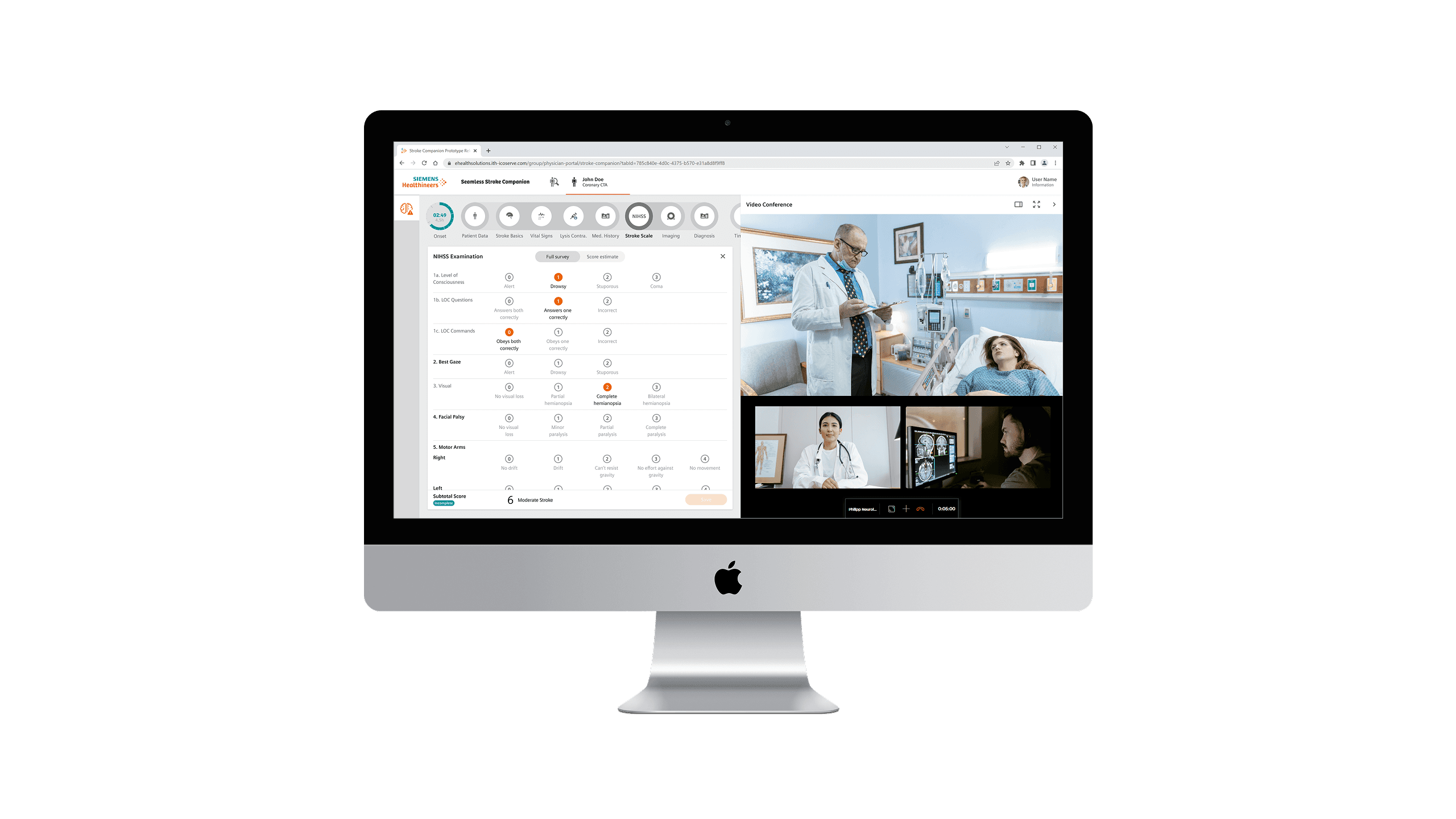
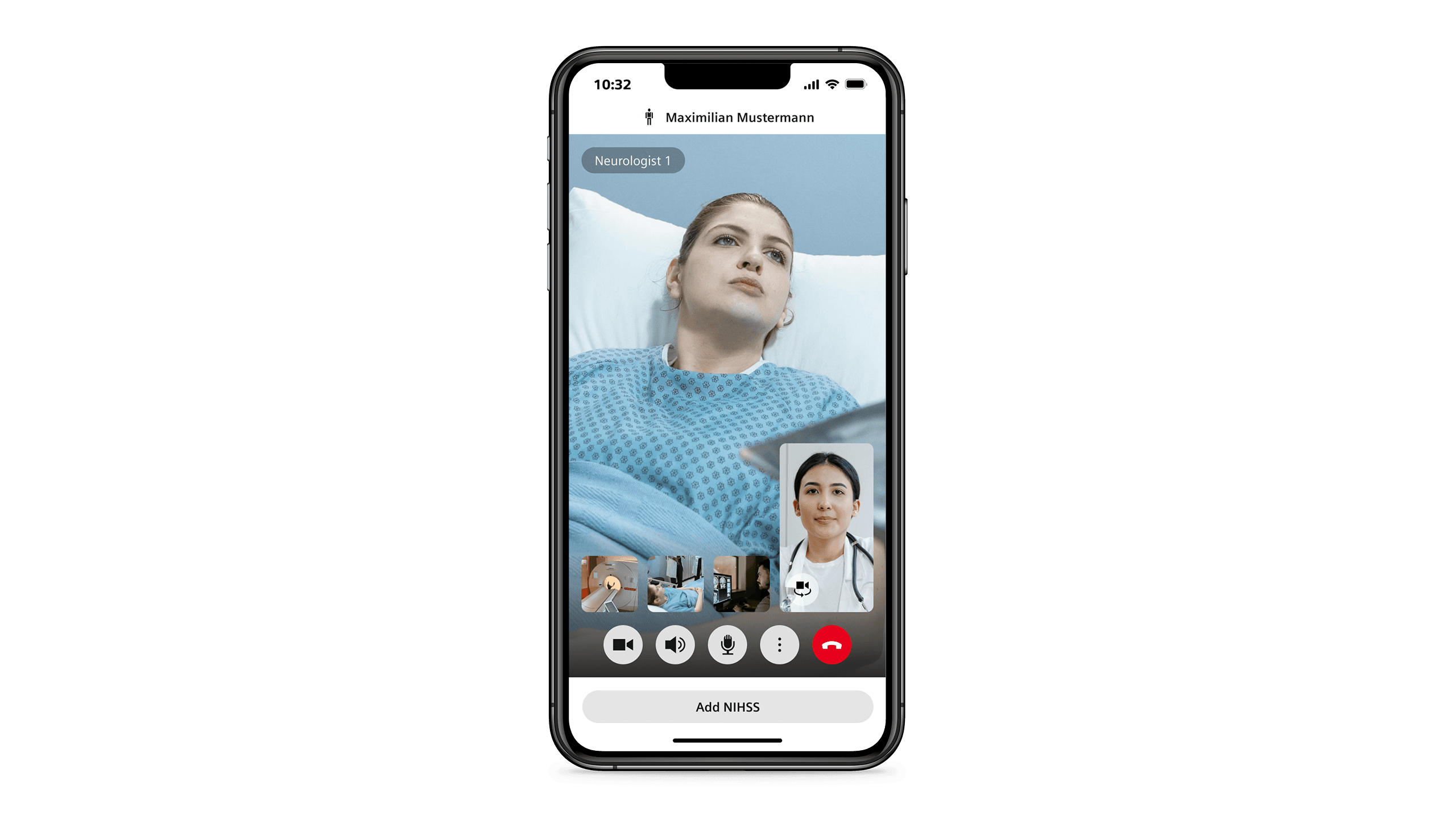
Real-time communication: Integrate chat, video, and alerts directly into the patient data view.
Responsiveness under constraints: Ensure performance even in low-bandwidth environments.
4. Interaction & Interface Design
UX deliverables:
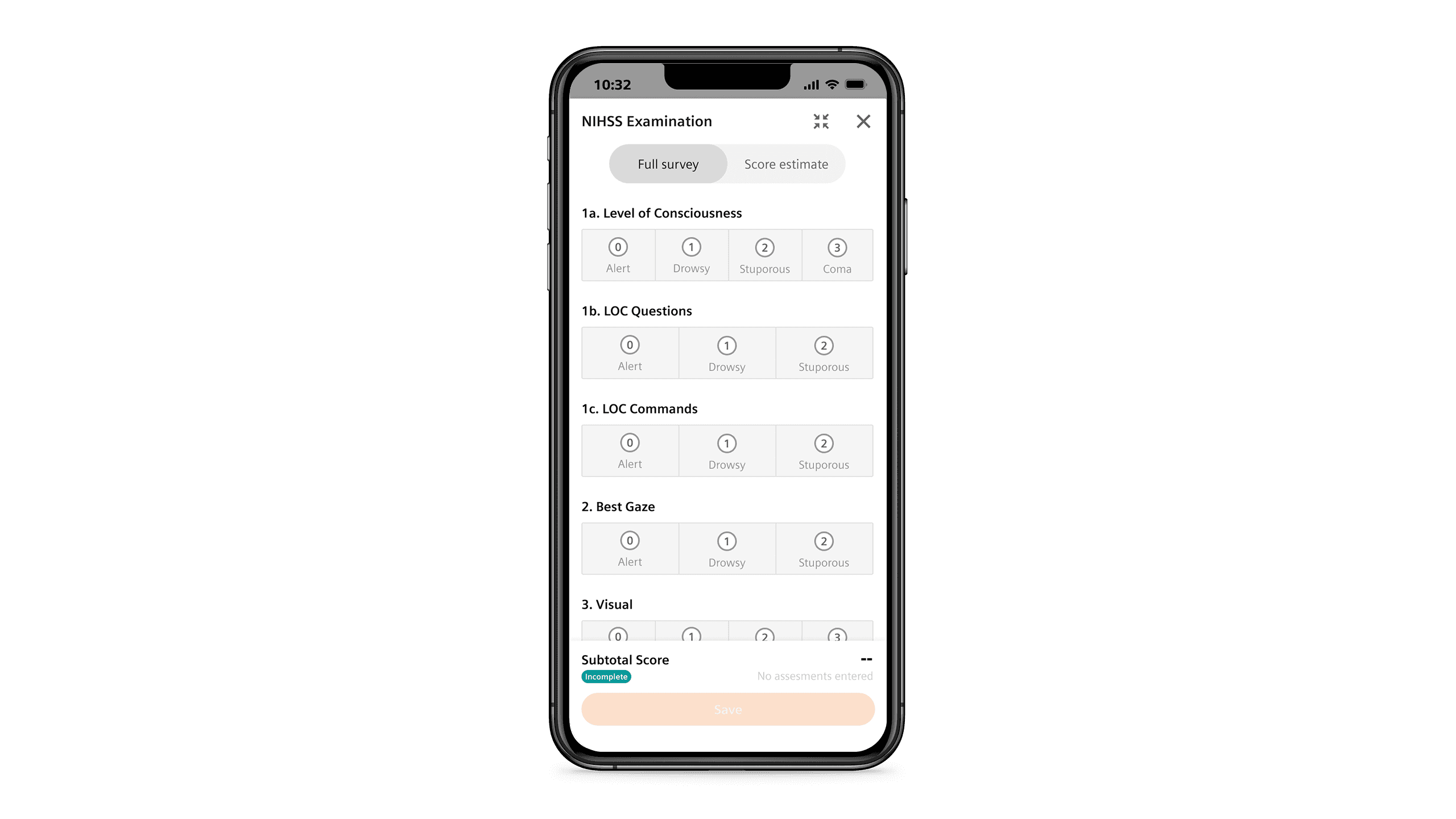
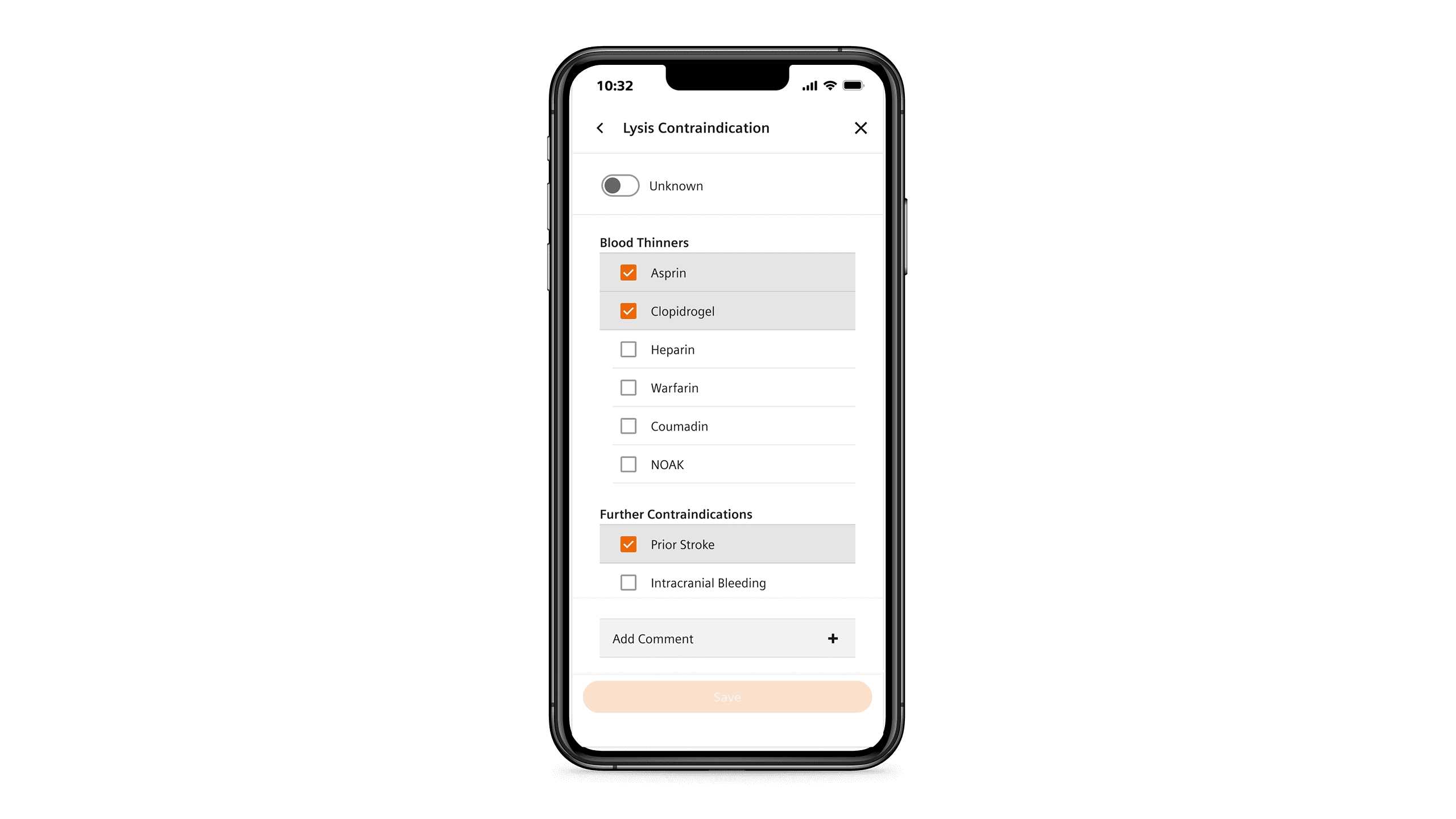
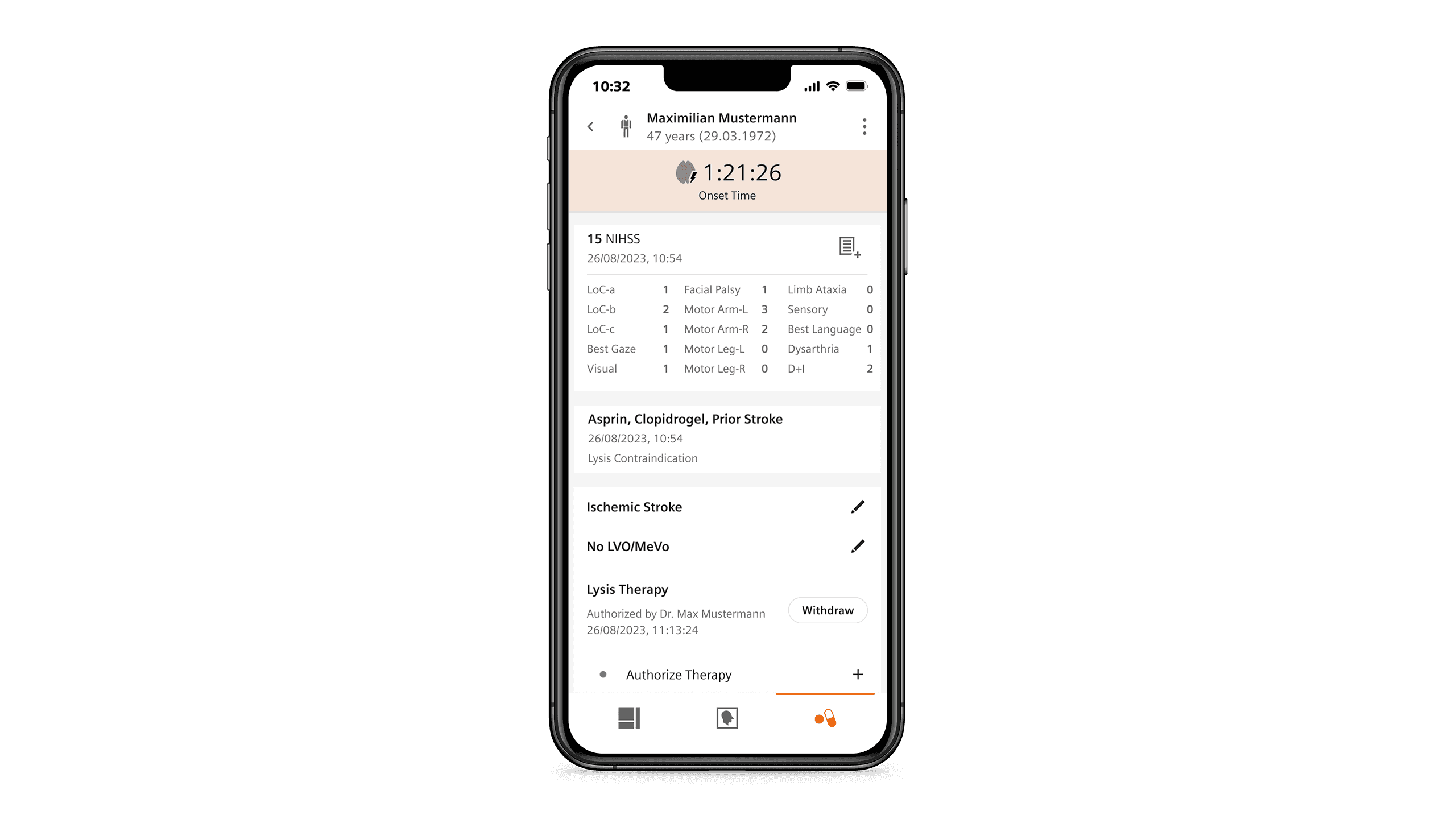
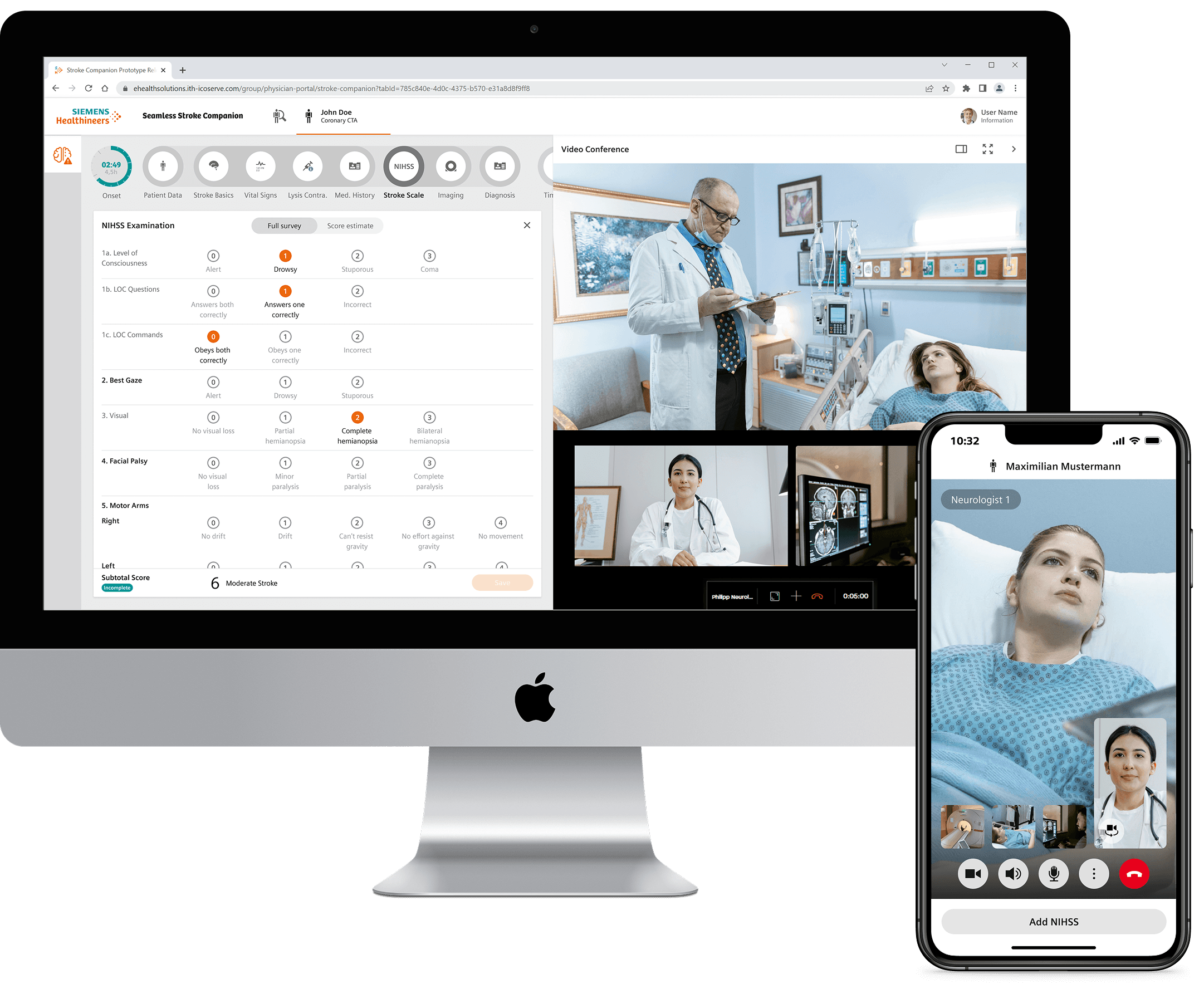
Prototype demonstrating guided NIHSS assessment
Real-time image and data sharing screen
Usability flows for mobile and desktop interactions
Accessibility considerations for field usage
Heuristic Evaluation
I conducted heuristic evaluations using 10 usability heuristics, resulting in:
Identification of interaction risks
Simplification of complex flows
Improved clarity around critical actions and states
Outcome & Impact
Delivered interaction concepts that support fast, safe clinical decision-making
Reduce time-to-treatment by ~30 minutes
Patient recovery outcomes improve by up to ~65% compared to standard care pathways.
Enhanced clinician confidence in remote stroke assessment
Reduced cognitive load during high-pressure clinical documentation
Improved collaboration between field teams and hospital specialists